Progressive Web Applications (PWAs) are made with the technologies that are used for websites, but the good thing is that they look like a mobile application and that’s why providing amazing features. Let’s understand.
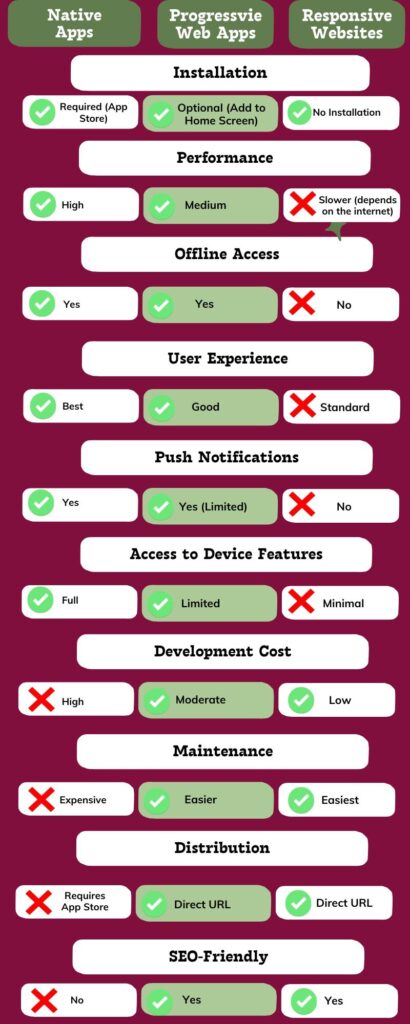
Difference between native apps, progressive web apps (PWAs) and responsive websites
Following is the features comparison chart you need to understand first.
How PWAs Work
PWAs function using three core technologies:
Service Workers – Enable offline access and push notifications.
Web App Manifest – Defines the app’s appearance and behavior.
Safe – Utilizes HTTPS to safeguard data.
In contrast to conventional web applications, PWAs don’t need application stores. They can be reached through a browser and saved to a home screen with a single click.
Key Features of PWAs
A well-built Progressive Web App has these essential features:
Responsive – Works on all screen sizes and devices.
Offline Support – Operates even without an internet connection.
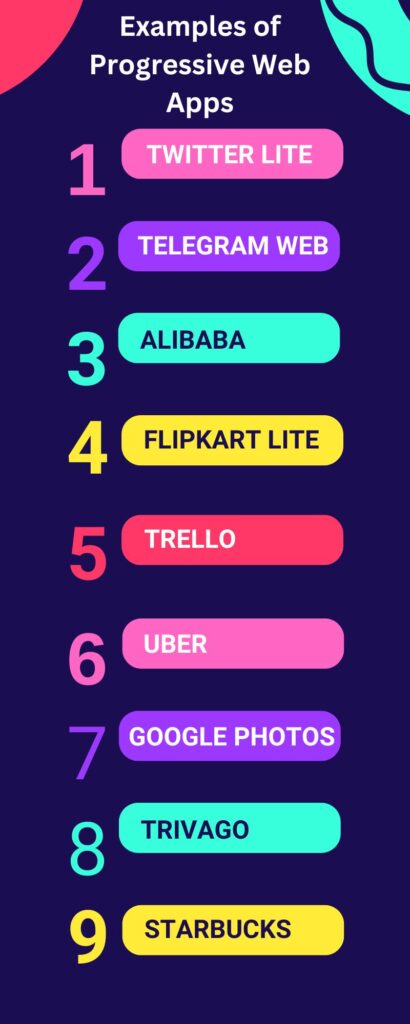
Starbucks PWA – Works offline for seamless ordering.
Frequently Asked Questions On PWAs
What is the difference between Progressive Web Apps vs native apps?
PWAs: Work in browsers, cost less, and update automatically.
Native Apps: Require downloads, are costly, but offer better performance.
What is the best way to start designing Progressive Web Apps?
The best way is to:
Utilize a framework like React or Angular.
Add Service Workers for offline support.
Use Web App Manifest for mobile optimization.
Can Progressive Web Apps send push notifications?
Yes, Progressive Web Apps support push notifications, but iOS devices have limited support for them compared to Android devices.
How do Progressive Web Apps compare to web apps vs native apps?
PWAs provide a hybrid solution with better performance than traditional web apps. Native apps still have an advantage in deep hardware integration.
Are Progressive Web Apps on iOS as effective as on Android?
Not entirely. Progressive Web Apps in iOS operate well, but iOS restricts push notifications and some background features.
What are some real-world examples of Progressive Web Apps?
Twitter Lite – Faster, uses less data.
Pinterest PWA – Higher engagement.
Is Progressive Web Apps development cost-effective?
Yes! Progressive Web Apps development costs less than native app development because a single codebase operates across multiple platforms in the development world.